An industrial automation electric linear actuator is a key motion component used to generate controlled linear movement in automated machinery. Compared with manual mechanisms or conventional pneumatic cylinders, electric linear actuators can provide programmable movement, adjustable speed, controlled positioning, and flexible integration with modern automation systems.
For OEM equipment manufacturers and system integrators, the requirements for an electric actuator are often different from one machine to another. Stroke, load, speed, positioning accuracy, installation dimensions, duty cycle, motor type, and control method all need to match the actual application.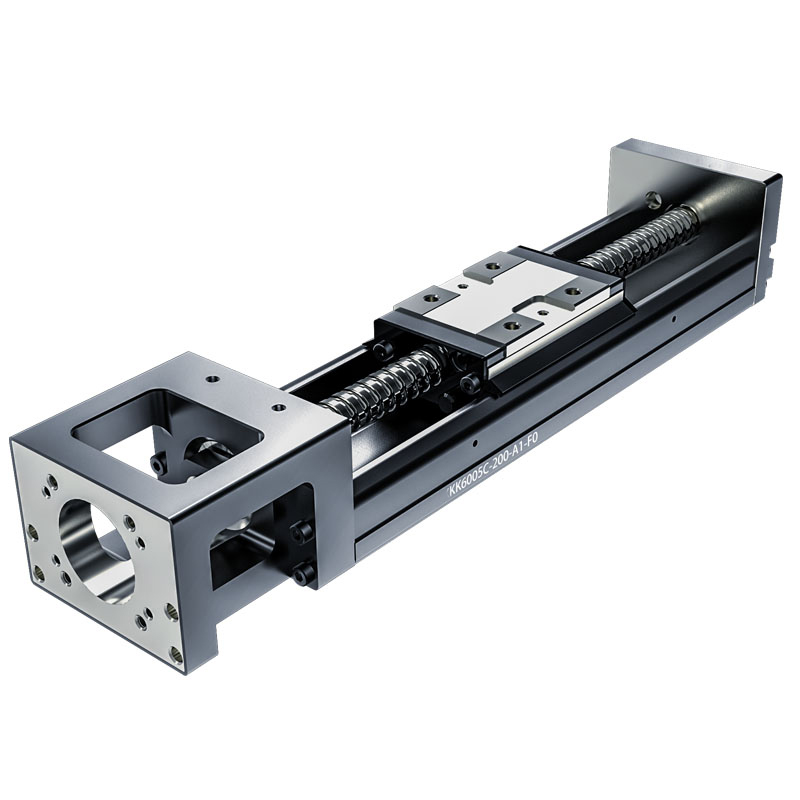
A custom electric linear actuator can therefore be designed around the machine rather than forcing the machine to use a fixed standard actuator.
An electric linear actuator converts rotary motor motion into controlled linear movement, or uses a direct linear motor principle depending on the actuator design.
A typical industrial electric linear actuator may include:
Different drive technologies can be selected according to the required motion performance. Belt-driven, ball screw, gear rack, and other configurations may be suitable for different combinations of speed, stroke, load, and positioning requirements.
For OEM applications, the complete actuator should be evaluated as a motion system rather than simply selecting a motor and actuator separately.
One of the main advantages of an electric actuator is its ability to work with an electronic control system.
The actuator can be configured for different:
This makes electric linear actuators suitable for automated equipment that needs repeatable and programmable movement.
Different machines require different travel distances.
A custom electric linear actuator can be designed according to the required stroke, whether the application involves a short positioning movement or a longer transfer operation.
Typical applications include:
The required stroke should be determined together with payload, speed, acceleration, and installation space.
Electric actuators can provide controlled movement profiles through the motor and motion controller.
This is useful when a machine needs to move quickly during transfer while reducing speed near the final position.
A suitable motion profile can help improve:
Actual speed and acceleration depend on the actuator structure, motor, payload, stroke, transmission, and control system.
For industrial automation, an actuator may need to move a component to a predefined position repeatedly.
Electric linear actuator systems can be integrated with encoders and motion controllers to achieve controlled positioning.
Typical precision applications include:
The achievable positioning accuracy and repeatability should always be evaluated according to the complete mechanical and control configuration.
Different automation applications require different transmission technologies.
| Drive Type | Main Characteristics | Typical Applications |
|---|---|---|
| Belt Drive | High-speed movement, suitable for longer strokes | Transfer, handling, pick-and-place |
| Ball Screw | Suitable for controlled positioning | Assembly, inspection, precision equipment |
| Gear Rack | Suitable for long-distance travel | Robot transfer, large automation systems |
| Linear Motor | Direct-drive motion and high dynamic response | High-speed precision applications |
Selecting the appropriate drive mechanism is an important part of electric actuator customization.
Industrial automation equipment often has limited installation space.
An electric linear actuator can be configured for different mounting orientations and mechanical interfaces.
Depending on the machine design, customization may include:
This flexibility is especially valuable for OEM equipment manufacturers developing machines with non-standard mechanical structures.
Electric linear actuators can be combined to create multi-axis motion systems.
Typical configurations include:
Multiple electric axes can work together to provide coordinated positioning for complex automation processes.
Electric linear actuators can move components, tools, or fixtures during automated assembly.
Common operations include:
For multi-step assembly equipment, several electric axes can be synchronized through a central motion controller.
Pick-and-place machines require fast and repeatable movement between pickup and placement positions.
An electric linear actuator can provide the required horizontal or vertical movement and can be combined with:
For multi-axis pick-and-place equipment, the actuator can form part of an integrated Cartesian motion system.
Electric actuators are widely applicable to automated material handling.
They can move workpieces between:
For long-distance transfer, the actuator configuration should be selected based on payload, travel distance, speed, and duty cycle.
Industrial machines often require automatic loading and unloading of workpieces.
An electric linear actuator can move a gripper or tooling assembly into the required loading position and return it after the operation is completed.
This can reduce manual handling and improve production consistency.
Electric linear actuators can position cameras, sensors, probes, or workpieces during automated inspection.
Typical applications include:
Positioning requirements should be considered together with sensor resolution and measurement system accuracy.
Packaging machines often require controlled linear movement for feeding, positioning, sorting, and product handling.
Electric actuators can be used to:
Servo-controlled systems can be particularly useful where movement needs to be synchronized with other machine processes.
An electric linear actuator or linear motion axis can be used to provide additional travel for industrial robots.
A robot mounted on a linear axis can move between multiple workstations, extending the robot's effective working range.
This type of system is commonly considered for:
For OEM customers, the most important advantage of a custom electric actuator is the ability to match the actuator to the actual machine requirements.
Instead of selecting a standard actuator first and adapting the equipment around it, engineers can define the motion requirements first:
Stroke → Load → Speed → Acceleration → Positioning → Duty Cycle → Installation → Motor → Control
The actuator can then be configured around these parameters.
Customization may include:
This approach is particularly suitable for automation equipment manufacturers, machine builders, robotics integrators, and industrial OEM customers.
Electric and pneumatic actuators can both provide linear movement, but they are often selected for different application requirements.
| Feature | Electric Linear Actuator | Pneumatic Cylinder |
|---|---|---|
| Programmable position | Yes | Limited |
| Speed control | Programmable | Available with pneumatic control |
| Multiple positions | Suitable | More complex |
| Motion profile | Flexible | More limited |
| Servo integration | Suitable | Generally requires additional control |
| Energy source | Electricity | Compressed air |
| Data/control integration | Easy to integrate with automation controls | Requires additional components |
| Best suited for | Programmable automated motion | Fast simple linear movement |
For applications requiring multiple positions, variable speed, synchronized movement, or electronic control, an electric linear actuator can provide greater flexibility.
The appropriate choice should ultimately be based on the machine's actual motion requirements and operating environment.
Before selecting an actuator for an automation machine, OEM engineers should define:
For vertical applications, the effects of gravity and braking should also be considered.
For high-cycle applications, duty cycle and thermal performance should be evaluated together with the motor and transmission system.
A standard electric actuator may be sufficient for simple applications, but custom machinery often requires a different approach.
A custom electric linear actuator manufacturer can help engineers optimize the complete motion system according to the application.
For example, an OEM customer may need a long-stroke actuator with a specific motor position and mounting interface. Another customer may require several actuators to work together as an XYZ positioning system.
In these situations, customization can simplify mechanical integration and help ensure that the actuator matches the rest of the machine.
For KNK-type OEM applications, customization can be considered across the linear module structure, drive mechanism, stroke, motor interface, mounting structure, and multi-axis configuration.