In modern industrial automation, linear modules are widely used in pick-and-place systems, automated assembly lines, packaging machinery, inspection equipment, and robotic applications. Their positioning accuracy directly affects product quality and production efficiency.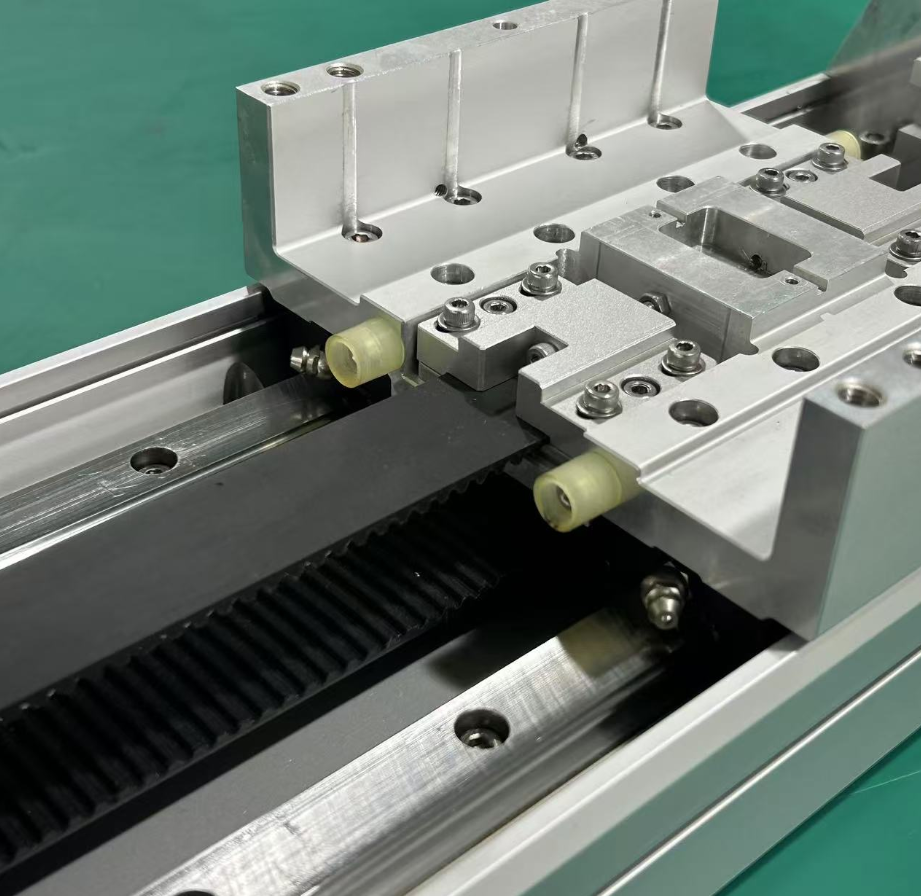
However, after a period of operation, some users notice that the slider can be moved slightly when stopped, or the positioning accuracy gradually decreases. This phenomenon is commonly referred to as backlash or mechanical play.
Many engineers ask:
Why does a linear module develop backlash, and how can it be eliminated?
This article explains the most common causes of backlash in linear modules and provides practical solutions to help OEM manufacturers and automation integrators maintain high-precision motion performance.
Backlash refers to the unwanted clearance or free movement between mechanical transmission components.
Common symptoms include:
In high-precision automation systems, even a small amount of backlash can significantly affect production quality.
When backlash increases, the system may experience:
The commanded position differs from the actual position.
The module cannot consistently return to the same location.
Direction changes may produce shaking or impact.
Assembly and inspection accuracy may decrease.
Mechanical shock increases stress on transmission parts.
For precision manufacturing, controlling backlash is critical.
For ball screw linear modules, screw wear is one of the most common causes of backlash.
Over time:
This creates noticeable play between the screw and nut.
Inspect:
Replace worn ball screws or ball nuts when necessary.
Many precision ball screw systems use preloaded nuts to eliminate clearance.
If preload decreases due to:
backlash may appear.
Adjust or replace the preloaded ball nut according to manufacturer specifications.
In belt-driven linear modules, the timing belt is responsible for motion transmission.
After prolonged operation:
This may create apparent positioning gaps.
Routine maintenance helps prevent precision loss.
The coupling connects the motor shaft to the transmission mechanism.
If the coupling becomes loose:
Inspect:
Tighten or replace damaged couplings immediately.
In rack-and-pinion linear modules, backlash may develop between:
As wear increases, positioning precision decreases.
Some systems use anti-backlash mechanisms to minimize clearance.
Although guide rails do not directly generate motion, wear can create unwanted movement.
Possible causes include:
Inspect:
Replace worn guide components if necessary.
Even a brand-new linear module may exhibit backlash-like behavior if installed incorrectly.
Common installation problems include:
These conditions can affect overall motion stability.
Verify:
Follow manufacturer installation guidelines carefully.
When the actual load exceeds the module's design capacity:
Check:
Select a properly sized module for the application.
Insufficient lubrication accelerates wear of:
Increased wear eventually leads to backlash.
Implement a scheduled lubrication program using manufacturer-recommended lubricants.
Engineers can perform several inspections:
Check for:
Move the slider gently by hand to detect free play.
Measure actual movement clearance.
Monitor positioning errors through the control system.
Accurate diagnosis helps identify the root cause quickly.
Depending on the cause, several solutions are available.
OEM customers frequently require:
Custom-engineered linear modules can include:
Reduced mechanical clearance.
Higher rigidity and stability.
Improved positioning control.
Reduced vibration and deformation.
Optimized for actual operating conditions.
These features significantly improve long-term precision.
To avoid backlash problems:
✔ Lubricate regularly
✔ Inspect transmission components periodically
✔ Monitor positioning accuracy trends
✔ Check belt tension schedules
✔ Avoid overloading equipment
✔ Replace worn parts proactively
✔ Maintain a clean operating environment
Preventive maintenance is far less expensive than unexpected downtime.
If a linear module develops backlash, the cause is usually related to component wear, insufficient preload, loose couplings, belt stretching, rack wear, guide rail deterioration, improper installation, or poor maintenance practices.
By identifying the root cause early and implementing proper maintenance procedures, manufacturers can restore positioning accuracy and extend equipment life.
For OEM machine builders and automation integrators, choosing a high-quality custom linear motion system with optimized transmission components and precision engineering is the best way to minimize backlash and achieve long-term performance.