As manufacturers continue to pursue higher productivity, lower labor costs, and improved product quality, robot pick and place systems have become an essential part of modern industrial automation. From electronics assembly and packaging lines to automotive manufacturing and logistics centers, pick and place robots are helping companies increase efficiency while maintaining consistent production standards.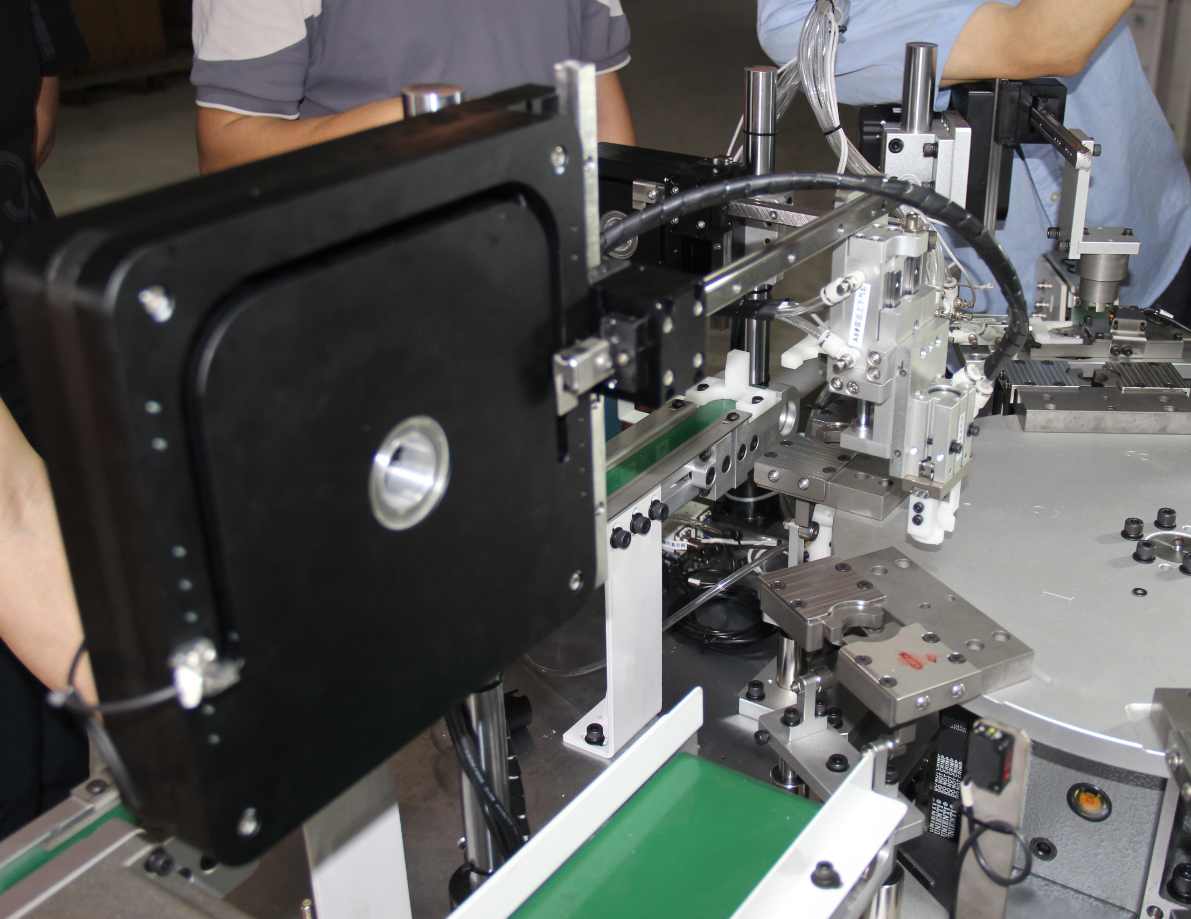
For OEM machine builders and automation integrators, selecting the right robot pick and place solution can significantly improve production performance and provide a competitive advantage.
In this article, we'll explore how pick and place robots work, their key benefits, common applications, and why customized automation solutions are increasingly preferred by industrial customers.
A robot pick and place system is an automated solution designed to pick up products, components, or materials from one location and place them accurately at another location.
The process typically includes:
These systems can operate continuously with high speed and repeatability, making them ideal for repetitive manufacturing tasks.
A typical pick and place system consists of:
Common robot types include:
Used to grip products through:
Controls:
Used for:
Together, these components create a highly efficient automated handling system.
Robots can work continuously without fatigue, significantly increasing throughput compared to manual operations.
Modern pick and place robots offer highly repeatable positioning.
Typical repeatability can reach:
depending on the robot type and application.
This ensures consistent product quality.
Manual pick and place operations often require multiple workers.
Automation helps manufacturers:
Unlike manual operations, robots maintain the same motion profile throughout every cycle.
This consistency reduces:
Modern robotic systems can be adapted for:
This flexibility is especially valuable for OEM manufacturers.
Used for:
High precision and speed are essential in these applications.
Applications include:
Pick and place robots significantly improve packaging efficiency.
Robots handle:
while maintaining hygiene requirements.
Used for:
where accuracy and reliability are critical.
Applications include:
Automation improves productivity and consistency.
Cartesian robots move along X, Y, and Z axes.
Advantages include:
Ideal for industrial automation systems.
Gantry robots are designed for:
They are commonly used in manufacturing and logistics.
Known for:
Widely used in packaging and food industries.
Offer:
Suitable for assembly and handling applications.
PPU systems provide:
They are ideal for repetitive transfer operations involving small parts.
Every production line has unique requirements.
Standard robotic solutions may not fully meet specific application needs.
Custom automation systems allow optimization of:
Designed according to machine layout.
Matched to actual production requirements.
Optimized for target output.
Customized for specific products.
Compatible with:
Customized solutions maximize efficiency and return on investment.
Before selecting a solution, consider:
Determines robot capacity requirements.
Impacts robot type selection.
Affects cycle time requirements.
May require specialized materials or protection.
Scalable systems support long-term growth.
A detailed application analysis helps ensure the correct solution is selected.
| Feature | Robot Pick and Place | Manual Handling |
|---|---|---|
| Productivity | High | Limited |
| Accuracy | Consistent | Variable |
| Labor Cost | Low Long-Term | High |
| Operating Hours | 24/7 | Limited |
| Repeatability | Excellent | Moderate |
| Product Quality | Consistent | Operator Dependent |
For most high-volume manufacturing operations, automation provides significant long-term advantages.
As smart manufacturing evolves, robot pick and place systems are becoming more advanced.
Emerging trends include:
These innovations continue to improve productivity and flexibility.
A robot pick and place system is one of the most effective automation solutions for increasing productivity, improving accuracy, and reducing labor costs in modern manufacturing. Whether used in electronics, packaging, automotive, medical, or logistics applications, pick and place robots deliver reliable and repeatable performance.
For OEM manufacturers and automation integrators, customized robot pick and place solutions provide the flexibility needed to meet unique production requirements while maximizing operational efficiency and return on investment.