When selecting a linear motion system, many engineers and purchasing managers notice a significant price difference between ball screw linear modules and belt-driven linear modules. In some cases, a ball screw module can cost 30% to 100% more than a comparable belt-driven system.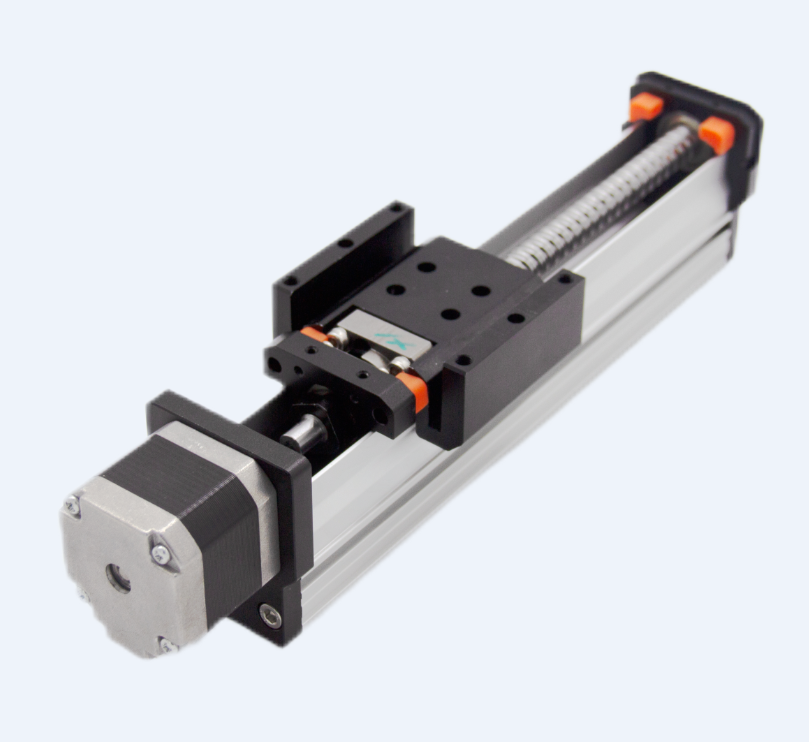
This often leads to the question:
Why are ball screw linear modules more expensive than belt-driven linear modules?
The answer lies in the differences in manufacturing complexity, positioning accuracy, load capacity, materials, and application requirements.
For OEM manufacturers and automation integrators, understanding these differences can help optimize equipment design and avoid unnecessary costs.
Before comparing costs, let's briefly review how each system works.
A ball screw linear module converts rotary motion into linear motion through a precision ball screw and ball nut assembly.
As the screw rotates:
Ball screw modules are widely used in applications requiring:
A belt-driven linear module uses a timing belt and pulley system to move a carriage along a guide rail.
Advantages include:
These systems are commonly used for material handling and high-speed transfer applications.
The primary reason for the higher cost is the ball screw itself.
Manufacturing a precision ball screw requires:
The tolerances involved are significantly tighter than those required for timing belts and pulleys.
As a result:
This directly increases the final product price.
One of the biggest advantages of a ball screw linear module is precision.
Ball Screw Module
Belt-Driven Module
Because many industries require micron-level positioning, manufacturers invest heavily in precision machining and quality control.
Higher precision inevitably leads to higher production costs.
Ball screw systems are designed to handle larger loads and thrust forces.
Advantages include:
For applications such as:
A ball screw system often provides superior performance.
The stronger structural requirements contribute to the higher cost.
A ball screw linear module contains several premium components.
Typical components include:
In comparison, belt-driven systems rely on:
The component cost difference is substantial.
Rigidity is critical in many automation applications.
A ball screw system provides:
This is especially important for:
Achieving this level of rigidity requires stronger mechanical structures and more precise assembly processes.
Although initial costs are higher, ball screw systems often provide greater long-term value.
Benefits include:
For high-precision equipment, these advantages justify the additional investment.
Belt-driven systems offer a simpler design.
Timing belts are less expensive to manufacture than precision ball screws.
Installation and adjustment are generally simpler.
The overall mechanical structure is often lighter.
Many applications do not require micron-level precision.
For these projects, a belt-driven module can provide excellent value.
| Feature | Ball Screw Linear Module | Belt-Driven Linear Module |
|---|---|---|
| Initial Cost | Higher | Lower |
| Positioning Accuracy | Excellent | Good |
| Repeatability | Very High | Moderate |
| Load Capacity | High | Medium |
| Maximum Speed | Medium | High |
| Stroke Length | Medium | Long |
| Rigidity | Excellent | Moderate |
| Maintenance | Low | Low |
Both technologies have their advantages depending on application requirements.
A ball screw linear module is typically the best choice when your project requires:
Ideal for micron-level positioning applications.
Suitable for demanding industrial environments.
Critical for automated assembly and inspection systems.
Required in precision manufacturing equipment.
A belt-driven linear module is often preferable when:
Suitable for rapid product transfer.
Capable of handling several meters of travel.
Offers a lower initial investment.
Ideal for material handling and packaging systems.
In many automation projects, neither standard ball screw nor standard belt-driven systems perfectly meet requirements.
Custom linear modules can be engineered for:
A custom solution ensures optimal performance while controlling overall project costs.
When evaluating suppliers, consider:
Can they recommend the most suitable drive technology?
Do they support OEM and automation projects?
Precision manufacturing directly impacts performance.
Strong support reduces implementation risks.
The right supplier helps maximize return on investment.
The reason ball screw linear modules are more expensive than belt-driven linear modules is not simply because of the screw itself. Higher manufacturing precision, superior positioning accuracy, greater rigidity, stronger load capacity, and premium components all contribute to the higher cost.
For applications requiring maximum precision and stability, the additional investment in a ball screw system is often justified. For high-speed transport and long-stroke applications, a belt-driven module may provide a more economical solution.
For OEM manufacturers and automation integrators, understanding these differences helps ensure the right motion system is selected for each application, balancing performance, reliability, and budget.