In industrial automation and motion control systems, choosing the right component is critical for performance and efficiency. A common comparison engineers face is stepper motor vs linear actuator. While both are widely used in automation, they serve different purposes and operate in fundamentally different ways.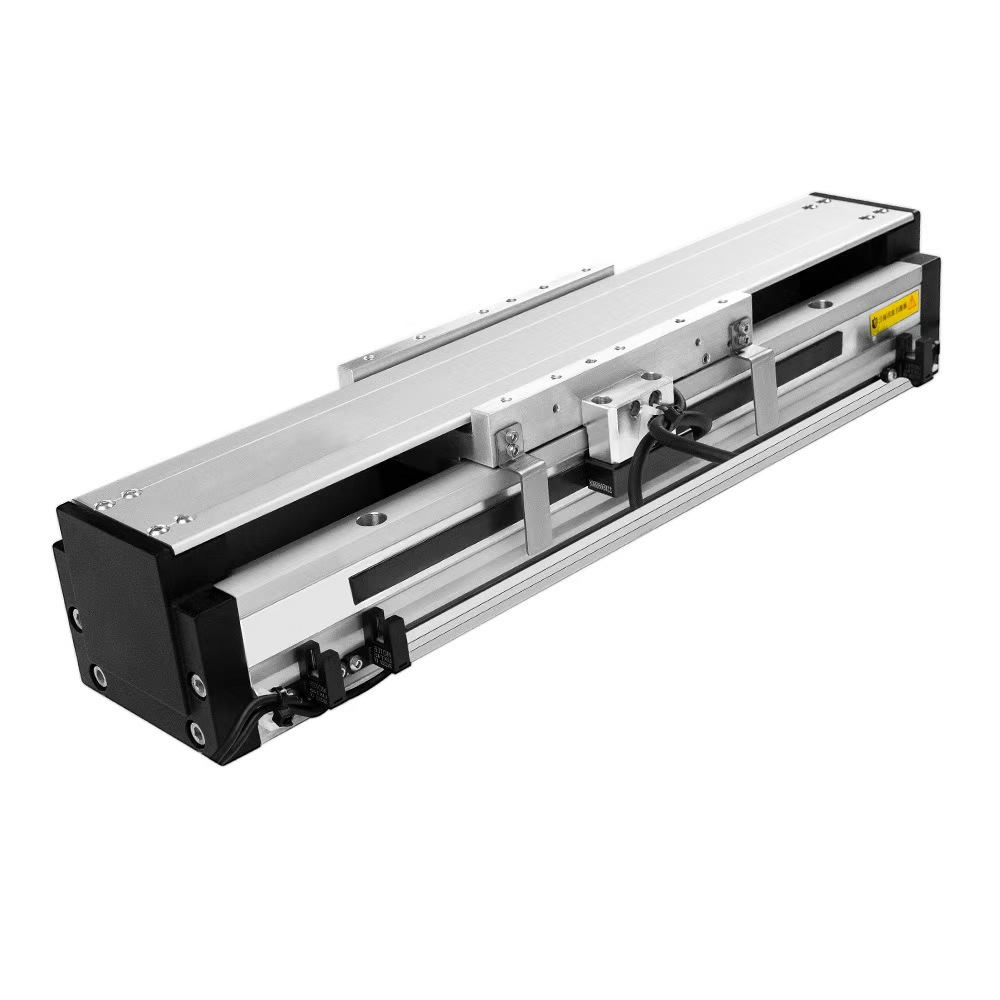
Understanding their differences helps you select the most suitable solution for your application.
A stepper motor is an electric motor that converts electrical pulses into discrete rotational movements. Each pulse moves the motor shaft by a fixed angle, allowing precise control of position, speed, and acceleration without requiring feedback systems in many cases.
Rotational motion output
High positioning accuracy
Open-loop control capability
Easy integration with controllers
Cost-effective for precise positioning tasks
3D printers
CNC machines
Camera systems
Robotics
Automated positioning systems
A linear actuator is a device that converts energy (electric, pneumatic, or hydraulic) into straight-line motion. Unlike stepper motors, which produce rotational movement, linear actuators directly generate linear motion.
Direct linear motion
High load capacity
Simple mechanical structure
Suitable for pushing, pulling, lifting
Available in electric, pneumatic, and hydraulic types
Industrial automation systems
Lifting platforms
Packaging machinery
Medical equipment
Material handling systems
The most fundamental difference in stepper motor vs linear actuator is motion output:
Stepper motor → rotational motion
Linear actuator → linear motion
If your system requires straight-line movement, a linear actuator is usually the more direct solution.
Stepper motors offer excellent positioning accuracy through controlled step movement. They are ideal for applications requiring fine rotational control.
Linear actuators can also achieve high precision, especially when combined with ball screws or linear guides, but typically rely on additional components for accurate positioning.
Linear actuators are generally better suited for handling heavy loads, especially in industrial environments.
Stepper motors are more suitable for light to medium loads and often require additional mechanical systems (like lead screws) to move loads linearly.
Using a stepper motor for linear motion usually requires extra components such as:
Lead screws
Ball screws
Linear rails
In contrast, linear actuators integrate these functions into a single unit, simplifying system design.
Stepper motors can achieve high speeds in rotational applications but may lose torque at higher speeds.
Linear actuators provide consistent force across their stroke but may be slower depending on the drive mechanism.
A stepper motor is the better choice when:
Rotational motion is required
High positioning accuracy is critical
The load is relatively light
Cost-effective control is needed
The system already includes linear conversion mechanisms
A linear actuator is ideal when:
Direct linear motion is needed
High load capacity is required
System simplicity is important
The application involves pushing, pulling, or lifting
Harsh industrial environments are involved
In many advanced systems, stepper motors and linear actuators are used together. For example, a stepper motor can drive a ball screw mechanism to create a customized linear actuator system.
This hybrid approach combines the precision of stepper motors with the functionality of linear motion systems.
When comparing stepper motor vs linear actuator, the right choice depends on your application requirements. Stepper motors excel in precise rotational control, while linear actuators provide direct and powerful linear motion.
For engineers and manufacturers, understanding these differences is essential to designing efficient and reliable automation systems. Selecting the correct motion solution can significantly improve system performance, reduce complexity, and optimize long-term operation.