As industrial automation systems become increasingly sophisticated, engineers and machine builders are often faced with an important design decision:
Should I choose a single-axis linear module or a multi-axis linear module?
The answer depends on factors such as motion requirements, installation space, payload, positioning accuracy, cycle time, and future expansion needs.
For OEM manufacturers and automation integrators, selecting the right linear motion system can directly impact machine performance, project costs, and production efficiency.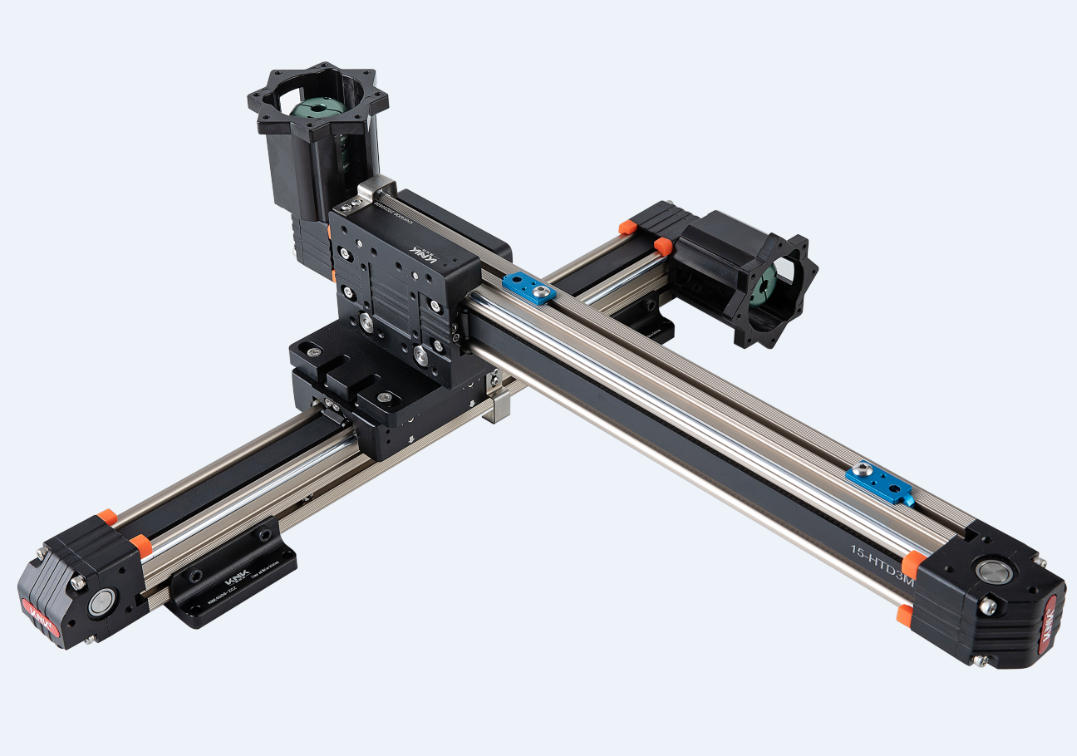
This guide addresses the most common questions about single-axis and multi-axis linear module selection and provides practical recommendations for custom automation projects.
A single-axis linear module consists of one motion axis that moves along a straight line.
Typical components include:
Single-axis modules perform motion in only one direction, such as:
They are the simplest and most cost-effective linear motion solution.
A multi-axis linear module combines two or more linear axes to create complex motion paths.
Common configurations include:
Provides horizontal movement in two directions.
Applications:
Adds vertical movement for three-dimensional positioning.
Applications:
Can include:
These systems handle more complex automation tasks.
A single-axis solution is suitable when the application only requires movement along one direction.
Typical examples include:
Advantages:
✔ Lower cost
✔ Simple control
✔ Easier installation
✔ Reduced maintenance
For straightforward automation tasks, a single-axis module often provides the best value.
A multi-axis system becomes necessary when products must move between multiple coordinates.
Examples include:
Advantages:
✔ Greater flexibility
✔ Complex motion capability
✔ Higher automation level
✔ Improved production efficiency
Many customers assume multi-axis systems are less accurate.
In reality, precision depends on:
A properly designed multi-axis linear module can achieve positioning accuracy comparable to a single-axis system.
For ultra-high precision applications, ball screw or linear motor systems are often preferred.
Generally speaking:
Lower investment due to:
Higher initial cost but often delivers:
The best choice depends on the application's long-term return on investment.
Payload is one of the most important design factors.
Suitable for:
Suitable for:
Suitable for:
Proper load calculation is critical to ensuring long-term reliability.
Different drive technologies offer different performance characteristics.
Advantages:
Best for:
Advantages:
Best for:
Advantages:
Best for:
Many manufacturers start with a single-axis solution and later expand their equipment.
A modular design allows:
Choosing a scalable platform can reduce future upgrade costs.
Space limitations often influence module selection.
Require:
Require:
However, they can often replace multiple separate machines, saving overall factory space.
| Feature | Single-Axis Module | Multi-Axis Module |
|---|---|---|
| Initial Cost | Lower | Higher |
| Motion Capability | One Direction | Multiple Directions |
| Control Complexity | Simple | Moderate to Advanced |
| Automation Level | Basic | Advanced |
| Productivity | Moderate | High |
| Flexibility | Limited | Excellent |
| Expansion Capability | Good | Excellent |
Both options have their place in modern automation systems.
Standard catalog products often cannot fully meet project requirements.
Custom solutions allow manufacturers to optimize:
Choose XY, XYZ, or custom gantry layouts.
Designed for specific applications.
Matched to actual operating conditions.
Balanced according to project goals.
Compatible with robots, conveyors, vision systems, and PLC controls.
Customized systems often improve both performance and cost efficiency.
Requires ultra-precise positioning.
Supports assembly and testing operations.
Enables accurate and repeatable motion.
Improves throughput and efficiency.
Supports assembly, inspection, and material handling.
Facilitates sorting and transfer operations.
As Industry 4.0 continues to evolve, multi-axis systems are becoming increasingly intelligent.
Emerging technologies include:
These innovations help manufacturers improve productivity while reducing downtime.
Choosing between a single-axis linear module and a multi-axis linear module depends on the specific requirements of the application. Single-axis systems offer simplicity and cost efficiency, while multi-axis systems provide greater flexibility and automation capabilities.
For OEM manufacturers and automation integrators, working with an experienced linear module manufacturer can help ensure the optimal combination of speed, precision, payload capacity, and cost. A customized linear motion solution not only improves machine performance but also creates long-term value for automation projects.