As manufacturers continue to pursue higher productivity, consistent quality, and lower operating costs, automation has become a key investment. One of the most versatile solutions in modern factories is the Industrial Robot Arm, which can perform repetitive, high-speed, and high-precision tasks with exceptional reliability.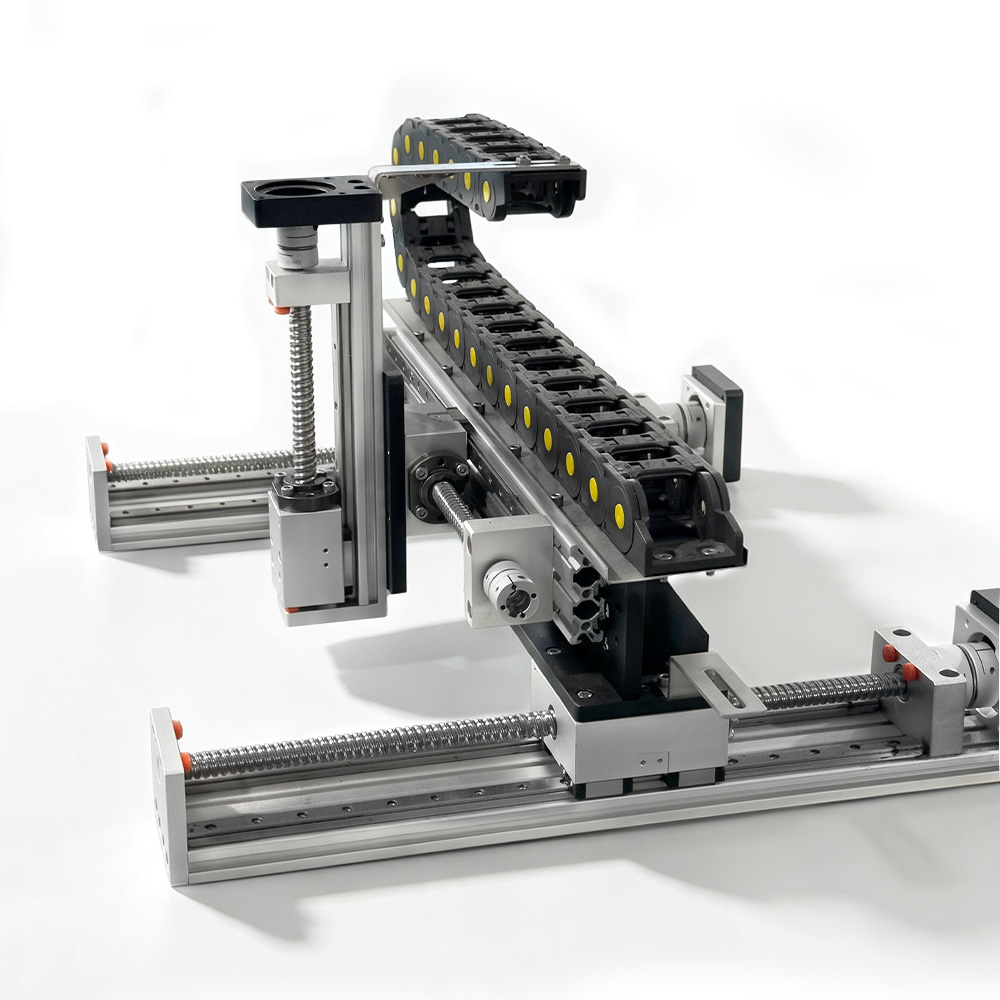
Whether used for assembly, welding, machine tending, palletizing, or material handling, an Industrial Robot Arm enables manufacturers to increase production efficiency while reducing labor dependency.
For OEM machine builders, system integrators, and industrial manufacturers, selecting a custom Industrial Robot Arm ensures the robot is optimized for payload, reach, cycle time, and integration with existing production equipment.
An Industrial Robot Arm is a programmable mechanical manipulator designed to automate industrial processes. Depending on the application, robot arms may feature four, five, six, or seven axes, allowing them to perform complex movements with high repeatability.
A typical industrial robotic arm consists of:
Combined with advanced motion control software, industrial robot arms execute precise and repeatable tasks in demanding manufacturing environments.
Industrial robot arms operate through coordinated servo motors and intelligent motion control. Each joint moves independently while the controller synchronizes every axis to follow programmed paths.
A typical workflow includes:
Modern robot arms can also integrate with machine vision, force sensors, and AI-assisted control to improve positioning accuracy and production flexibility.
Industrial Robot Arms are designed for applications requiring consistent positioning accuracy.
Benefits include:
High repeatability is especially important for electronics, automotive, and medical manufacturing.
Robotic arms operate continuously with minimal downtime.
Advantages include:
This significantly improves manufacturing output.
Industrial Robot Arms can perform multiple production tasks by changing the end-of-arm tooling and programming.
Common operations include:
This flexibility makes them suitable for various production environments.
Robot arms can safely perform hazardous or repetitive operations such as:
Automating these tasks helps reduce workplace injuries and improve operational safety.
Industrial Robot Arms integrate with:
This enables manufacturers to build fully connected production lines.
Robot arms efficiently transfer products between workstations.
Typical applications include:
Industrial Robot Arms are widely used for:
Automation improves both speed and consistency.
Suitable for:
Robotic welding improves quality while reducing operator exposure.
Robot arms automatically load and unload:
This increases machine utilization and shortens cycle times.
Industrial Robot Arms automate:
They improve logistics efficiency while reducing labor costs.
Applications include:
Used for:
Suitable for:
Applications include:
Industrial Robot Arms support:
| Feature | Industrial Robot Arm | Cartesian Gantry Robot |
|---|---|---|
| Motion Type | Multi-axis rotary motion | Linear X-Y-Z motion |
| Flexibility | Excellent | High |
| Complex Trajectories | Excellent | Limited |
| Working Envelope | Compact and versatile | Large rectangular area |
| Programming | More complex | Simpler |
| Best Applications | Welding, assembly, machine tending | Pick and place, dispensing, material handling |
For tasks requiring complex orientations and multi-directional movement, an Industrial Robot Arm is often the preferred choice. For long-travel, high-speed linear applications, a Cartesian gantry system may offer greater efficiency.
Every production line has unique technical requirements. A custom solution ensures optimal performance and seamless integration.
Customization options include:
From lightweight electronic components to heavy industrial parts.
Configured according to machine layout and workspace dimensions.
Compatible with:
Supports machine vision for:
Compatible with common industrial communication standards for integration into existing automation systems.
When evaluating suppliers, engineers should consider:
The manufacturer should provide:
Look for suppliers that offer:
Reliable manufacturers maintain strict quality control through:
Comprehensive support should include:
Industrial robotic technology continues to evolve with:
These technologies help manufacturers improve productivity while increasing system flexibility.
An experienced automation partner can provide complete project support, including:
Working with a professional manufacturer reduces project risks and ensures the robot system delivers long-term value.