In industrial automation systems, linear modules are widely used for positioning, transportation, and automated motion control. Among the key components inside a belt driven linear module, the timing belt plays a critical role in converting motor power into efficient linear motion.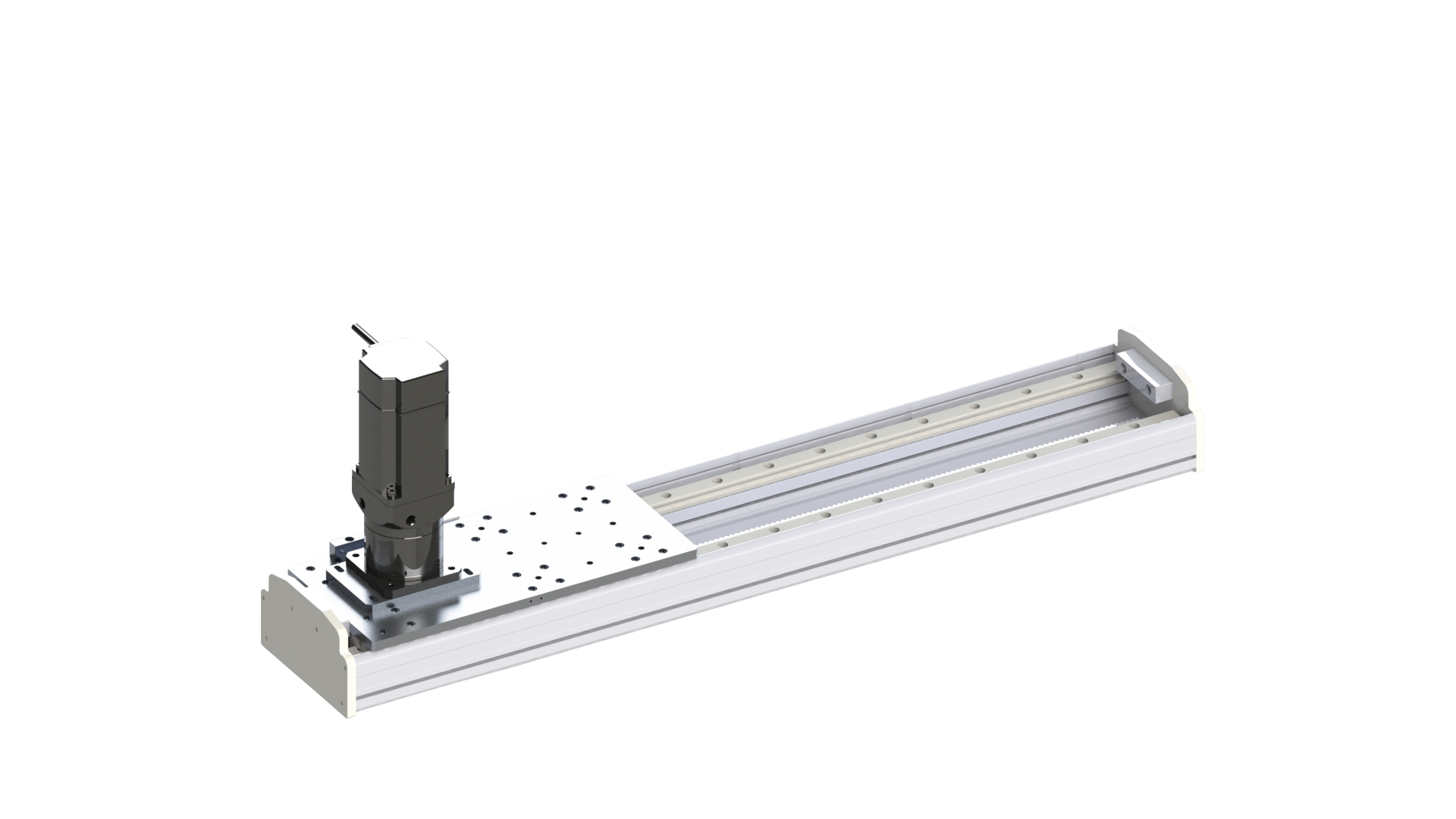
For OEM manufacturers, automation engineers, and machine builders, understanding the function of a timing belt in a linear module is essential for selecting the right motion solution for high-speed and precision automation equipment.
A timing belt linear module is a linear motion system that uses a timing belt and pulley mechanism to transfer motor rotation into linear movement. The system typically includes:
This structure enables fast, smooth, and repeatable linear motion for industrial automation applications.
The primary function of the timing belt is to transfer rotational power from the motor to the moving carriage, allowing the linear module to generate controlled linear motion.
However, the timing belt performs several important functions in industrial automation systems.
The most important role of the timing belt is power transmission.
This mechanism allows the module to move quickly and efficiently along a straight path.
Compared to ball screw systems, belt driven linear modules are better suited for high-speed applications.
Timing belts support:
This makes them ideal for applications such as pick-and-place systems and automated conveyors.
Timing belt systems are highly effective for long-stroke automation equipment.
Advantages include:
This is one reason why belt-driven modules are widely used in gantry robots and material handling systems.
In multi-axis automation systems, timing belts help maintain synchronized movement between multiple components.
Applications include:
Accurate synchronization improves production consistency and automation efficiency.
A properly designed timing belt system provides:
This improves motion stability and extends equipment lifespan.
Engineers often compare timing belt linear modules with ball screw systems.
The correct choice depends on application requirements.
Industrial belt driven linear modules are widely used in:
Supports fast product transfer and positioning.
Improves efficiency in high-speed production lines.
Provides synchronized linear motion for robotic systems.
Suitable for precision handling applications.
Optimizes automated transportation processes.
Standard modules may not always fit specialized industrial equipment. This is why many manufacturers choose custom timing belt linear module solutions.
Customization options include:
Custom solutions improve automation efficiency and machine compatibility.
When selecting a supplier, consider:
A reliable supplier helps ensure stable long-term operation and optimized machine performance.
The timing belt is one of the most important components in a linear module. It not only transfers motor power into linear motion but also enables high-speed movement, synchronized operation, and efficient automation performance.
By understanding the role of timing belts in linear motion systems, OEM manufacturers and automation integrators can select the right solutions for modern industrial automation applications.