In today's manufacturing industry, precision is no longer a competitive advantage—it is a necessity. From semiconductor production and electronics assembly to automated inspection and robotic systems, manufacturers require motion systems capable of delivering exceptional accuracy, repeatability, and reliability.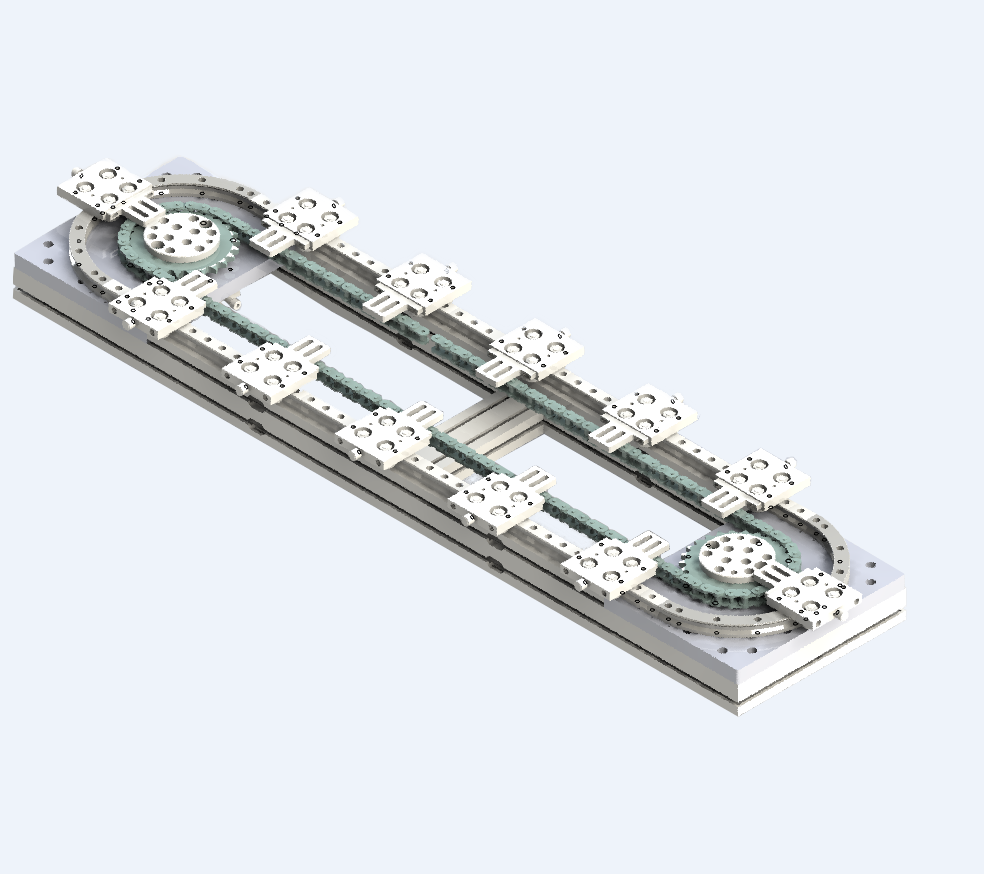
This is where precision linear motion technology plays a vital role.
For OEM manufacturers, machine builders, and automation integrators, investing in custom precision linear motion systems can significantly improve production quality, reduce operational errors, and enhance overall equipment performance.
Precision linear motion refers to the controlled movement of an object along a straight path with a high degree of accuracy and repeatability. These systems are designed to convert motor-driven rotational motion into smooth and precise linear movement.
A typical precision linear motion system may include:
Together, these components enable accurate positioning and consistent motion performance in industrial automation applications.
Modern manufacturing processes often require positioning accuracy measured in microns rather than millimeters.
Precision linear motion helps manufacturers achieve:
Accurate positioning reduces manufacturing defects and improves consistency.
Reliable motion systems support faster cycle times and higher throughput.
Precise movement improves assembly, inspection, dispensing, and machining operations.
High-quality motion systems experience less wear and require fewer repairs.
For industries where accuracy directly impacts profitability, precision motion systems are essential.
Linear guide rails provide smooth and stable movement while minimizing friction.
Benefits include:
They are fundamental to maintaining motion accuracy.
Ball screw systems are widely used when high positioning precision is required.
Advantages include:
Typical applications include semiconductor equipment, medical devices, and precision assembly machines.
For applications requiring high speed and long travel distances, belt-driven systems are often preferred.
Benefits include:
These systems are commonly used in gantry robots and material handling equipment.
Linear motors eliminate mechanical transmission components, providing:
They are widely used in advanced automation and high-tech manufacturing industries.
Semiconductor production requires micron-level positioning accuracy.
Applications include:
Precision motion systems support:
Robotic systems rely on precision linear motion for:
Medical devices often require highly accurate positioning for manufacturing and testing processes.
Camera positioning accuracy directly affects inspection reliability.
Precision motion systems help ensure repeatable measurement results.
| Feature | Precision Linear Motion | Standard Motion System |
|---|---|---|
| Positioning Accuracy | Very High | Moderate |
| Repeatability | Excellent | Standard |
| Motion Stability | Superior | Basic |
| Production Quality | Higher | Variable |
| Long-Term Reliability | Excellent | Moderate |
| Automation Integration | Advanced | Limited |
For high-value manufacturing applications, precision systems provide substantial performance advantages.
Higher-quality guide rails improve straightness and positioning stability.
Ball screws, belts, and linear motors offer different levels of precision.
Advanced servo systems improve motion control accuracy.
Machine frame rigidity directly influences positioning repeatability.
Temperature fluctuations, vibration, and contamination can affect precision.
Proper system design minimizes these influences.
Standard motion products may not meet the specific requirements of every application.
Custom precision linear motion solutions can be optimized for:
Designed according to actual machine requirements.
Matched to payload and operating conditions.
Engineered to achieve target positioning performance.
Suitable for cleanrooms, dust-intensive environments, or harsh industrial conditions.
Supports XY, XYZ, and gantry system configurations.
Customization improves both performance and overall project efficiency.
OEM manufacturers increasingly choose custom systems because they provide:
A custom solution often delivers better long-term value than adapting standard products.
When evaluating suppliers, consider:
Can the supplier provide application-specific recommendations?
Do they support OEM and automation projects?
Are quality control standards well established?
Can they assist with installation, optimization, and troubleshooting?
Have they successfully delivered solutions for similar applications?
These factors help ensure a successful partnership and reliable equipment performance.
As Industry 4.0 and smart manufacturing continue to expand, precision motion systems are becoming increasingly advanced.
Emerging trends include:
These innovations are helping manufacturers achieve greater productivity and precision than ever before.
Precision linear motion technology is the foundation of modern industrial automation. Whether used in semiconductor manufacturing, robotics, medical devices, or automated assembly lines, high-precision motion systems enable manufacturers to improve quality, increase efficiency, and maintain a competitive edge.
For OEM manufacturers and automation integrators, investing in custom precision linear motion systems provides the flexibility, accuracy, and reliability required to meet the challenges of today's advanced manufacturing environments.