In today's competitive manufacturing environment, precision, speed, and reliability are essential for every automated production line. Whether building semiconductor equipment, packaging machinery, robotic systems, or automated assembly lines, linear motion technology plays a critical role in ensuring smooth, accurate, and repeatable movement.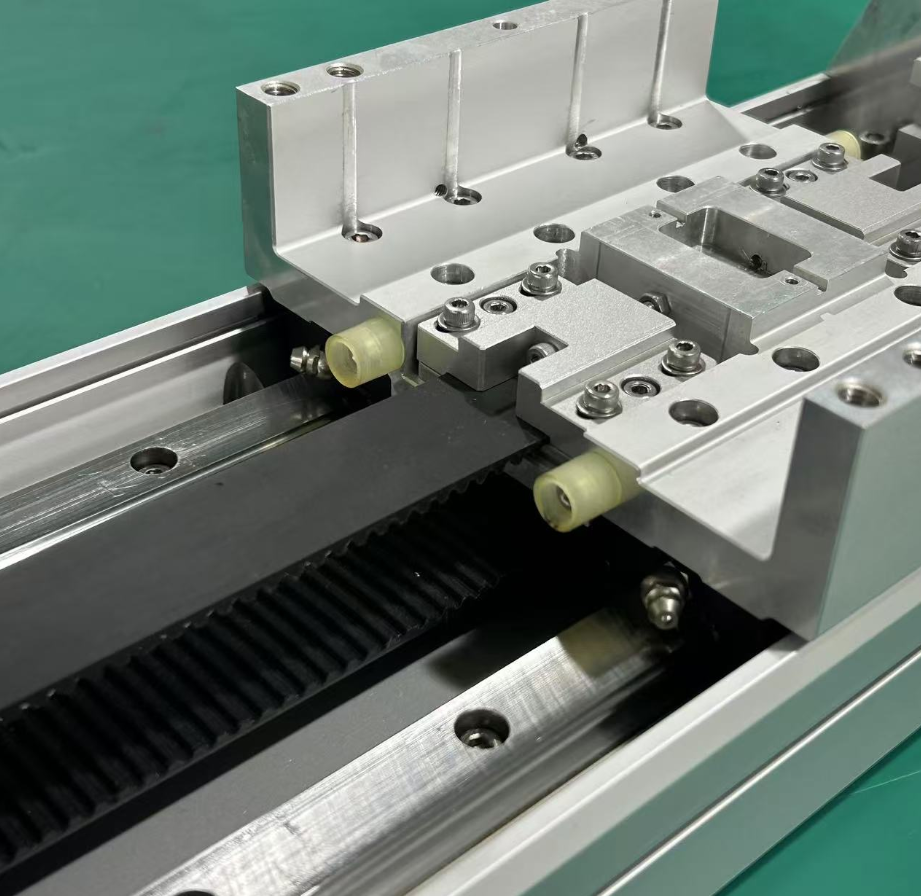
For OEM machine builders, system integrators, and industrial manufacturers, choosing the right linear motion solution can significantly improve equipment performance, reduce maintenance costs, and increase overall production efficiency. Standard products may be suitable for general applications, but custom linear motion systems often provide greater flexibility and long-term value.
This article explains the fundamentals of linear motion, common components, industrial applications, and how customized solutions help manufacturers achieve better automation results.
Linear motion refers to movement along a straight path. Unlike rotary motion, which rotates around an axis, linear motion enables objects or machine components to travel accurately between two or more positions.
Modern linear motion systems are designed to deliver:
These characteristics make linear motion indispensable in industrial automation.
A complete linear motion system typically consists of several precision components working together.
Linear guides provide smooth and stable movement while supporting loads and maintaining positioning accuracy.
They are widely used in:
Linear modules integrate guide rails, drive mechanisms, and structural frames into a compact motion unit.
Common drive options include:
Each offers different advantages depending on speed, load, and accuracy requirements.
Electric cylinders convert motor rotation into precise linear motion.
Compared with pneumatic cylinders, they provide:
Linear motors generate direct linear movement without mechanical transmission components.
Benefits include:
They are commonly used in semiconductor and precision manufacturing equipment.
Every automation project has unique requirements. A customized linear motion system offers several advantages over standard products.
Custom solutions are designed specifically for the application, resulting in:
Manufacturers can customize:
This flexibility simplifies equipment integration.
Custom-designed systems can fit limited installation spaces while maximizing machine performance.
Compact designs are particularly valuable for high-density automation equipment.
Although custom solutions may require a higher initial investment, they often reduce:
This leads to better long-term value.
Applications include:
Precision motion ensures high product quality.
Linear motion supports:
High accuracy is essential for semiconductor production.
Used for:
Automation improves efficiency and consistency.
Common applications include:
Reliable linear motion improves precision and repeatability.
Linear motion systems drive:
Programmable motion increases packaging efficiency.
Selecting the appropriate solution requires evaluating several factors.
Determine the maximum working load and dynamic forces.
Choose a stroke length that matches the machine design.
High-precision applications may require ball screw or linear motor systems, while belt-driven modules are suitable for high-speed transport.
Balance speed and precision according to production requirements.
Consider dust, humidity, temperature, and cleanroom requirements when selecting materials and protection levels.
Continuous operation may require heavy-duty components and enhanced lubrication systems.
OEM equipment builders often require application-specific designs rather than standard catalog products.
Customized solutions may include:
Combining X, Y, and Z axes for complex positioning tasks.
Supporting large work areas and heavy loads.
Combining conveyors, robots, vision systems, and actuators into a unified automation solution.
Simplifying installation into existing equipment.
These tailored designs improve production efficiency while reducing engineering complexity.
| Feature | Linear Motion System | Pneumatic System |
|---|---|---|
| Positioning Accuracy | High | Moderate |
| Repeatability | Excellent | Limited |
| Motion Control | Programmable | Basic |
| Energy Efficiency | High | Lower |
| Maintenance | Low | Higher |
| Automation Integration | Excellent | Moderate |
For applications requiring precise positioning and intelligent control, linear motion systems provide clear advantages.
The future of linear motion is closely linked with smart manufacturing.
Current trends include:
These technologies help manufacturers improve productivity while minimizing downtime.
An experienced supplier provides much more than components.
Professional manufacturers offer:
Working with a reliable partner reduces project risk and accelerates machine development.