A linear axis system is a key motion component used to achieve controlled linear movement in industrial automation, robotics, machine tools, inspection equipment, and production machinery. By combining a linear guide structure with an appropriate drive system, motor, and control components, a linear axis system can provide stable and repeatable positioning for different automation processes.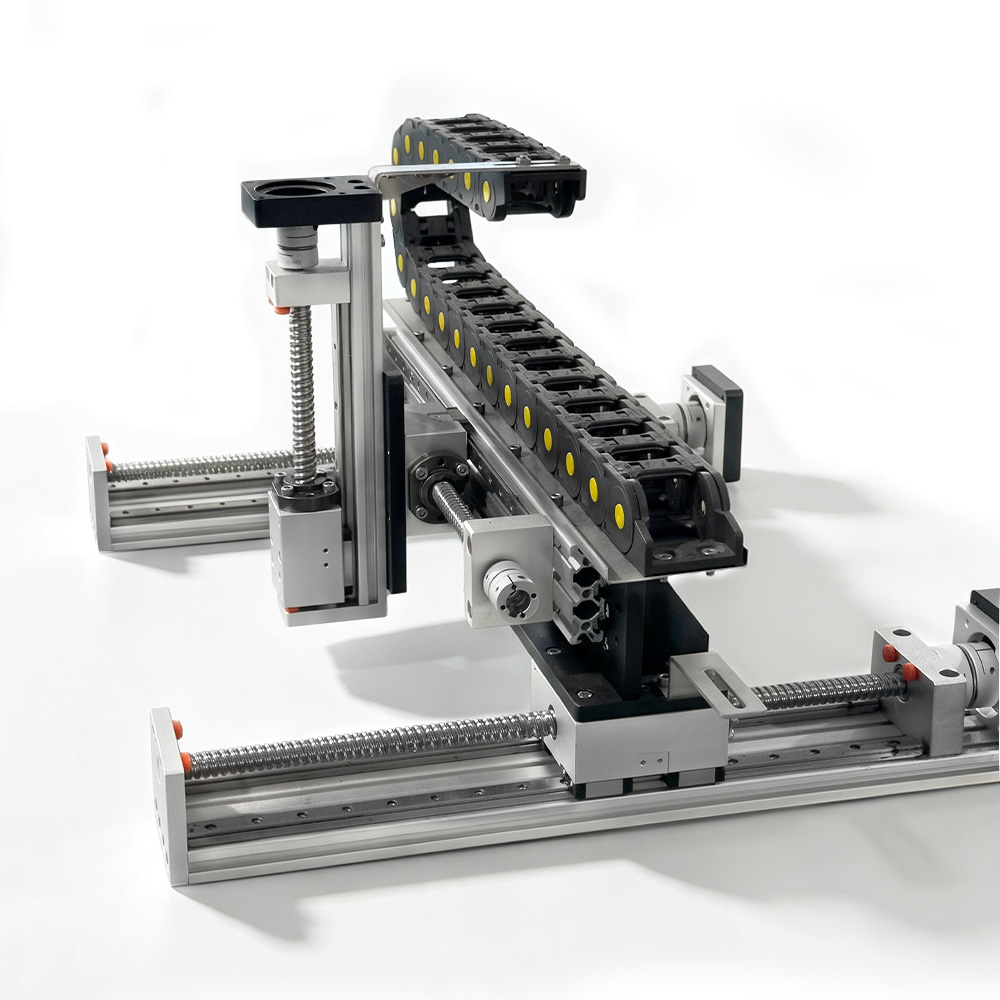
For OEM equipment manufacturers and automation integrators, a standard linear axis may not always meet the requirements of a specific machine. Factors such as stroke length, payload, speed, mounting space, positioning requirements, and working environment can vary significantly between applications. A custom linear axis system allows these parameters to be configured around the actual machine design.
A linear axis system is a complete mechanical motion unit designed to move a load along a straight path.
Depending on the application, the system may include:
The drive technology can be selected according to the required combination of speed, stroke, load, positioning accuracy, and operating conditions.
For example, belt-driven systems can be suitable for applications requiring longer travel and relatively high speed, while ball screw systems are commonly considered when higher positioning performance and controlled motion are required. Gear rack solutions can be used for long-distance linear movement where conventional screw-driven mechanisms may be less practical.
Stroke is one of the most important parameters when designing a linear axis.
A custom system can be configured according to the required travel distance rather than forcing the machine designer to adapt the equipment around a standard module.
Depending on the application, the linear axis may be designed for:
A linear axis system can use different transmission methods according to application requirements.
| Drive Type | Typical Characteristics | Common Applications |
|---|---|---|
| Belt Drive | High speed, suitable for longer strokes | Material handling, transfer, automation |
| Ball Screw | Controlled movement and positioning | Precision equipment, inspection, assembly |
| Gear Rack | Suitable for long travel | Robot transfer, large automation systems |
| Linear Motor | High dynamic response and direct drive | High-speed precision applications |
The appropriate configuration should be selected according to the complete motion profile rather than speed alone.
The required load can vary from a lightweight inspection device to a large robotic payload.
When selecting a linear axis, engineers should consider not only the static load but also:
For custom OEM projects, the guide and drive system can be selected according to the actual mechanical loading conditions.
A linear axis can provide controlled positioning for automated processes such as assembly, inspection, dispensing, and pick-and-place.
Actual positioning performance depends on the complete system, including the drive mechanism, motor, encoder, controller, mechanical structure, and installation conditions.
For applications requiring repeatable positioning, these factors should be evaluated together during the design stage.
Linear axes can also be combined to create multi-axis motion systems.
Typical configurations include:
This modular approach allows the motion system to be adapted to the working envelope of the machine.
One of the main advantages of working with a custom linear axis manufacturer is the ability to design the motion system around the customer's equipment.
Customization can involve:
This is particularly useful when replacing an existing motion mechanism or developing a new automated machine.
Linear axis systems are widely used for transferring components between different processing stations.
A typical system may move a workpiece from loading to assembly, testing, inspection, and unloading positions.
For robotic applications, a linear axis can provide additional horizontal travel.
A robot mounted on a linear axis can move between multiple workstations instead of being restricted to a single fixed position.
This type of configuration is often used for robot transfer systems and 7th-axis robot applications.
Linear axes can provide controlled movement for pick-and-place equipment.
They can be combined with grippers, vacuum systems, rotary axes, or other mechanisms to create customized handling systems for production equipment.
In automated assembly machines, linear axes can move components or tooling between processing positions.
Applications may include:
A linear positioning system can move cameras, sensors, probes, or workpieces to predetermined measurement positions.
Typical applications include:
Linear motion systems can be integrated into packaging equipment for product positioning, transfer, feeding, and handling.
The appropriate drive system depends on required speed, stroke, load, and cycle frequency.
Precision linear motion is also used in electronics and semiconductor-related equipment where controlled movement and repeatable positioning are important.
The mechanical configuration can be customized to accommodate compact installation spaces and specific equipment interfaces.
For OEM customers, the linear axis should be considered as part of the complete machine rather than as an isolated component.
A custom linear axis system can be developed around the customer's requirements, including:
Stroke → Load → Speed → Accuracy → Installation → Motor → Control → Working Environment
For example, a customer may require a 2-meter transfer axis with a specific mounting pattern, motor interface, and payload capacity. Another application may require a compact XY system with precise positioning for inspection equipment.
The appropriate solution can therefore be different even when two machines appear to have similar motion requirements.
Before selecting a linear axis, OEM engineers should provide the following information:
Providing these parameters early in the design process can help the manufacturer determine a suitable guide, drive mechanism, motor configuration, and structural design.
A custom linear axis supplier can provide more than an off-the-shelf motion module. For OEM projects, customization can help integrate the motion system into the mechanical structure and control architecture of the complete machine.
Depending on project requirements, customization may include the linear module structure, drive mechanism, stroke, mounting interface, motor connection, sensors, and multi-axis configuration.
This approach is particularly suitable for automation equipment manufacturers, system integrators, robotics companies, and industrial machinery manufacturers that require repeatable motion across multiple machines or production lines.