As industrial automation continues to evolve, the demand for precise and reliable motion control systems is increasing rapidly. Among the most widely used motion components, linear actuators play a critical role in converting rotational motion into controlled linear movement.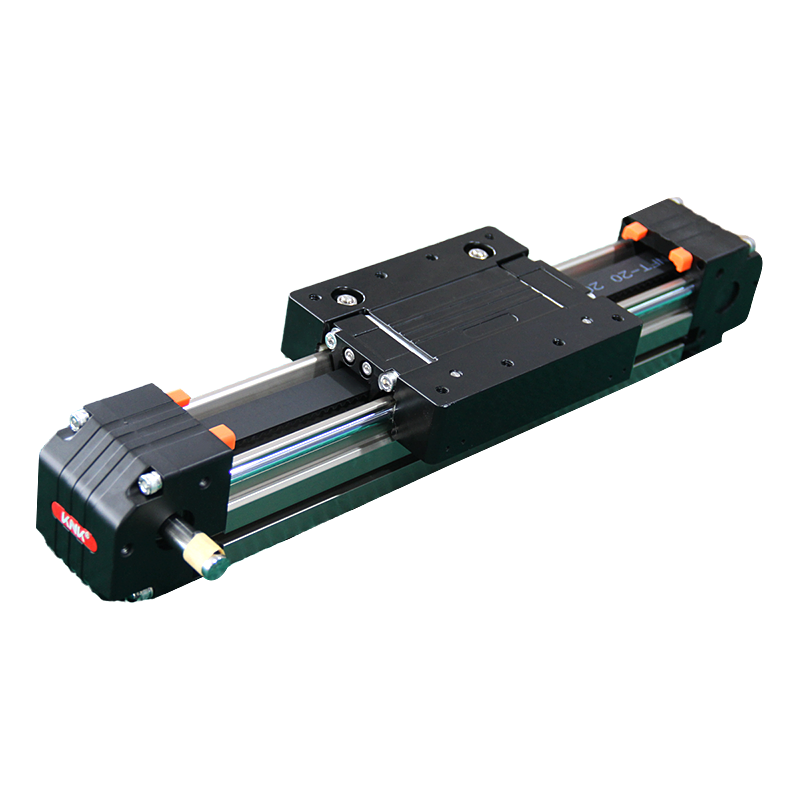
From automated production lines to precision medical equipment, linear actuator applications are expanding across multiple industries. For OEM manufacturers and automation system integrators, customized actuator solutions provide the flexibility and performance needed to meet specific project requirements.
A linear actuator is a device designed to create straight-line motion by converting electrical, pneumatic, or hydraulic energy into mechanical movement. Electric linear actuators are especially popular in industrial automation due to their precision, efficiency, and easy integration.
Common types include:
Each actuator type is suitable for different applications depending on load, speed, accuracy, and environmental conditions.
Modern manufacturing requires higher efficiency, greater precision, and reduced manual labor. This has led to increasing adoption of industrial linear actuator systems in automated equipment.
Key advantages include:
Linear actuators provide accurate positioning and repeatable movement.
Automated linear motion reduces cycle times and improves throughput.
Actuators can be integrated into robotic systems, conveyors, and automated machinery.
Electric linear actuators offer clean and low-maintenance operation compared to hydraulic systems.
One of the most important linear actuator applications is industrial automation. Actuators are widely used in:
These systems require reliable and synchronized linear motion for efficient production.
Linear actuators are commonly integrated into:
High-precision actuators improve machining accuracy and production consistency.
In medical automation, electric linear actuators provide smooth and accurate movement for:
Quiet operation and precise control are especially important in these applications.
Precision motion control is critical in electronics production. Typical applications include:
These industries often require micron-level positioning accuracy.
Standard actuators may not always meet the exact requirements of specialized equipment. This is why many OEM manufacturers prefer custom linear actuator solutions.
Customization options include:
Custom designs improve system compatibility and overall machine performance.
When selecting a supplier for linear actuator applications, consider the following:
A reliable manufacturer can help optimize both machine performance and long-term operational stability.
As smart manufacturing and industrial automation continue to grow, the importance of advanced motion control systems becomes even greater. Linear actuator applications are now essential in achieving efficient, accurate, and scalable automation.
By working with experienced manufacturers, OEM companies and system integrators can develop custom linear actuator solutions tailored to their production requirements and future expansion plans.